
Terms, Glossaries, Dictionaries

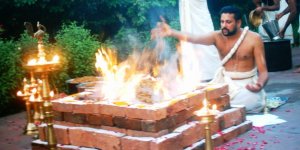
The Vedas are the oldest sacred texts of Hinduism and are considered the foundational scriptures of the Hindu tradition. »
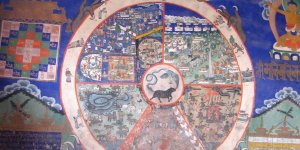
In Tibetan Buddhism, The Five Poisons (also called the five afflictive emotions or mental toxins) are the core distorted states of mind that generate suffering and keep beings trapped in samsara. »
In the Yoga Sutras of Patanjali, the Yamas are the first of the eight limbs of Ashtanga Yoga. They represent the ethical disciplines and moral restraints that govern our relationship with the outside world and others. »
The Niyamas are the second limb of Patanjali’s Eightfold Path. While the Yamas deal with our external social ethics, the Niyamas are internal disciplines or personal observances. They focus on our relationship with ourselves and help build the inner character necessary for the deeper stages of yoga. »

In Indian philosophy—specifically in the Yoga Sutras of Patanjali—the Kleshas are the five "afflictions" or "poisonous" mental states (mental affliction or mental-emotional patterns) that cloud the mind and cause human suffering (dukkha). They are seen as the root causes of all mental and emotional pain. »
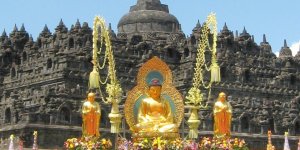
Vesak, often referred to as "Buddha Day," is the most significant and holiest festival in the Buddhist calendar. While various Buddhist traditions celebrate holidays throughout the year, Vesak is unique because it commemorates a "Triple Blessing"—the birth, the enlightenment, and the passing (Parinirvana) of Siddhartha Gautama, the Buddha. »
Most Hindus believe in one Supreme Cosmic Spirit or Ultimate Reality called Brahman, which is formless, infinite, and eternal. Because the human mind struggles to comprehend the infinite, Brahman manifests in thousands of different forms, which are the various deities. »
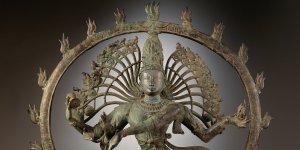
The Tandava is the divine cosmic dance performed by the Hindu god Shiva. It is one of the most important symbols in Hindu mythology, representing the cycle of the universe—from creation and preservation to destruction and liberation. »
Niyoga is an ancient Hindu practice, primarily mentioned in scriptures like the Mahabharata and the Manusmriti, that allowed a childless widow (or sometimes a wife whose husband was incapable of procreation) to conceive a child with a designated male, usually a brother-in-law or a worthy sage. »
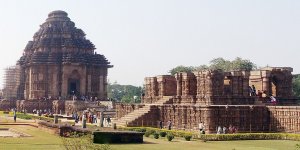
Prana Pratishtha is a highly significant ritual in Hinduism wherein a physically sculpted idol or image (known as a murti) is consecrated and transformed into a living embodiment of a deity. »
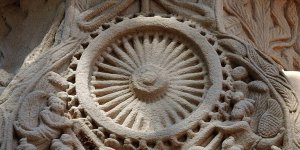
Saṅkhāra, in the sense of the totality of imprints or habitual patterns, is enumerated as one of the Five Khandhas that constitute a being, alongside Rūpa, Vedanā, Saññā, and Viññāṇa. »
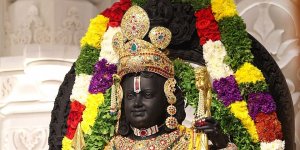
Ram Lalla (or Balak Ram) represents the divine form of the god Rama as a 5-year-old child, symbolizing innocence, purity, and devotion in Hinduism. »
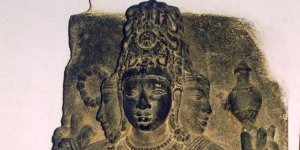
Prajapati is a creator deity in Vedic Hinduism. The name is a title rather than a single personality and has been used for different divine figures across Hindu texts. »
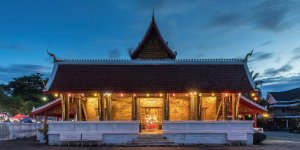
Wat Lao refers to Laotian Buddhist temples, serving as cultural and religious centers for the Lao community, often providing meditation, Dhamma teachings, and hosting traditional festivals like Lao New Year (Boun Pee Mai). »
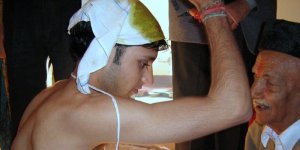
In Indian religions (Hinduism, Buddhism and Jainism), Samskaras (Sanskaras) have two main meanings: they are both rites of passage that mark the stages of life, and subconscious mental impressions that shape our character and habits. »