| / Terms, Glossaries, Dictionaries |
The Five Poisons in Tibetan Buddhism
In Tibetan Buddhism, The Five Poisons (also called the five afflictive emotions or mental toxins) are the core distorted states of mind that generate suffering and keep beings trapped in samsara. They are:
Ignorance / Delusion (moha, avidyā)
Meaning: Not seeing reality as it truly is. This is considered the root poison from which the others arise.
Example: Mistaking the ego or permanent self as ultimately real.
Attachment / Desire (rāga)
Meaning: Craving, grasping, possessiveness, addiction to pleasurable experiences.
Example: Clinging to relationships, status, pleasure, or identity for security.
Aversion / Anger (dveṣa)
Meaning: Hatred, aggression, irritation, rejection of what is unpleasant.
Example: Resentment, rage, contempt, or defensiveness.
Pride (māna)
Meaning: Inflated self-importance, superiority, arrogance, comparison.
Example: Feeling fundamentally “better than” others because of knowledge, spirituality, success, etc.
Jealousy / Envy (īrṣyā)
Meaning: Competitive insecurity, resentment of others’ success or happiness.
Example: Feeling threatened when others prosper or receive recognition.
Pride and jealousy are treated as additional primary afflictions in Five-Poison system. These five can be further condensed into The Three Poisons: pride is a combination of ignorance and desire (or attachment), and jealousy is a combination of attachment and aggression.
Iconography
In Tibetan iconography, these are often symbolized at the center of the Wheel of Life (Bhavachakra) by three animals: a pig (ignorance), a rooster (attachment), and a snake (aversion).
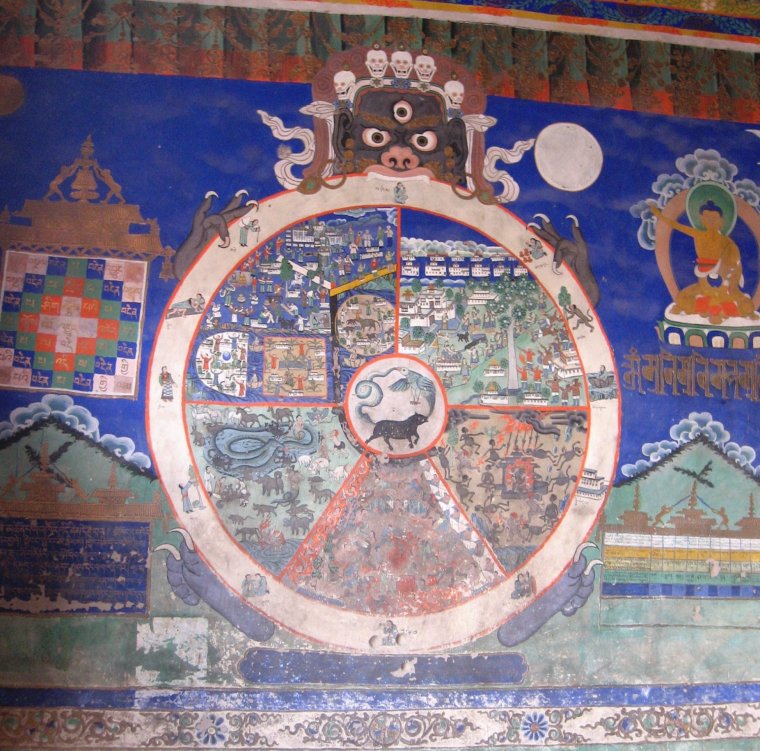
Wheel of life (Bhavacakra). Thikse Monastery courtyard.
Transformation
A key idea in Vajrayana/Tibetan practice is that the poisons are not merely eliminated — they can be transformed into wisdom.
Examples:
Ignorance ---> Wisdom of ultimate reality
Attachment ---> Discriminating wisdom
Anger ---> Mirror-like wisdom
Pride ---> Wisdom of equality
Jealousy ---> All-accomplishing wisdom
These correspond in advanced tantric systems to the Five Buddha Families, including figures like Vairocana, Akshobhya, Ratnasambhava, Amitābha and Amoghasiddhi.
YOU MAY ALSO LIKE