Aranyakas

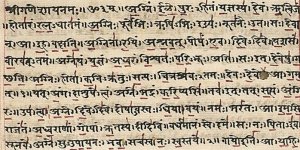
The Aranyakas are a part of the ancient Indian Vedas concerned with the meaning of ritual sacrifice, composed in about 700 BC.
They typically represent the later sections of the Vedas, and are one of many layers of Vedic texts. The other parts of the Vedas are the Samhitas (benedictions, hymns), Brahmanas (commentary), and the Upanishads (spirituality and abstract philosophy).
Aranyakas describe and discuss rituals from various perspectives; some include philosophical speculations.
In the immense volume of ancient Indian Vedic literature, there is no absolute universally true distinction between Aranyakas and Brahmanas.
Similarly, there is no absolute distinction between Aranyakas and Upanishads, as some Upanishads are incorporated inside a few Aranyakas.
The Aranyakas are associated with, and named for, individual Vedic shakhas.
Aitareya Aranyaka belongs to the Aitareya Shakha of Rigveda
Kaushitaki Aranyaka belongs to the Kaushitaki and Shankhayana Shakhas of Rigveda
Taittiriya Aranyaka belongs to the Taittiriya Shakha of the Krishna Yajurveda
Maitrayaniya Aranyaka belongs to the Maitrayaniya Shakha of the Krishna Yajurveda
Katha Aranyaka belongs to the (Caraka) Katha Shakha of the Krishna Yajurveda
Brihad Aranyaka in the Madhyandina and the Kanva versions of the Shukla Yajurveda.
Talavakara Aranyaka or Jaiminiya Upanishad Brahmana belongs to the Talavakara or Jaiminiya Shakha of the Samaveda. A part of this text forms the Kena Upanishad.
Aranyaka Samhita is not a typical Aranyaka text: rather the Purvarchika of the Samaveda Samhitas has a section of mantras, called the 'Aranyaka Samhita', on which the Aranyagana Samans are sung. (Wikipedia)