| / Terms, Glossaries, Dictionaries |
Ram Lalla (or Balak Ram)
Ram Lalla (or Balak Ram) represents the divine form of the god Rama as a 5-year-old child, symbolizing innocence, purity, and devotion in Hinduism.
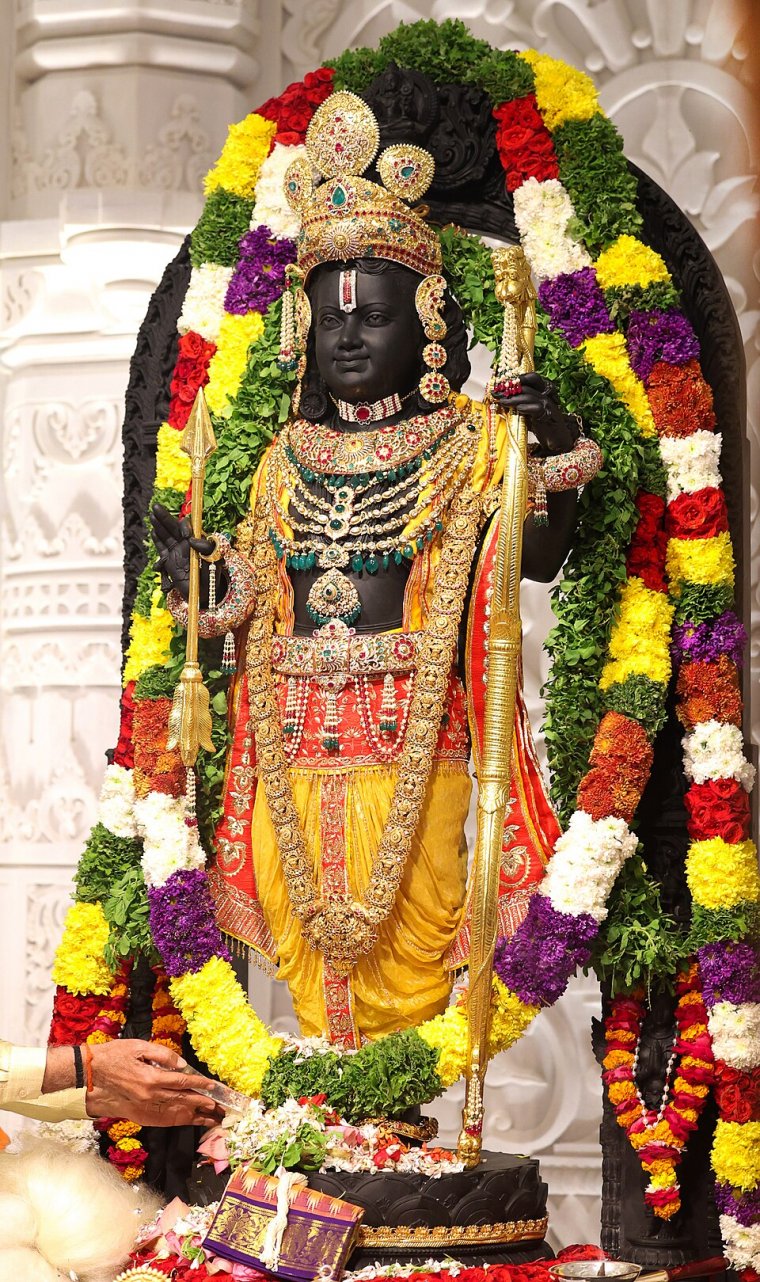
Ram Janmaboomi Temple in Ayodhya, Uttar Pradesh, India. Photo: Press Information Bureau on behalf of Prime Minister's Office, Government of India / Wikipedia
The new 51-inch statue, carved by Arun Yogiraj from a durable black stone, was consecrated in the new Ram Temple in Ayodhya on January 22, 2024, becoming a central figure of worship.
Lalla means beloved child in Braj Bhasha. This representation brings the faithful closer to the divinity, showing Rama not only as a king but also as an angelic child.
Sculpted by artist Arun Yogiraj, the idol is made of Krishna Shila stone (a type of black sandstone) that is resistant to water, acids, and fire. The statue captures the essence of the divinity at the age of five.
On 22 January 2024, in a major ceremony, it was installed in the Ram Mandir in Ayodhya, a historic moment for Hinduism.
The temple's design allows a ray of sunlight to touch the forehead of the god Ram Lalla every Ram Navami, an event known as Surya Tilak.
Although the image has long been worshipped at the site (formerly known as Ram Lalla Virajaman), the new structure of the Ram Temple provides a permanent and grand home for this form of the god.
YOU MAY ALSO LIKE