| / News |
Diwali 2026: India and the World Prepare to Celebrate the Festival of Lights with Spectacular Displays and Centuries-Old Traditions
Millions of people in India and across the world are preparing to celebrate Diwali, the Festival of Lights, on Sunday, November 8, 2026. One of the most important celebrations in Indian culture, Diwali brings together centuries-old religious traditions, family gatherings, illuminated streets and spectacular public festivities.
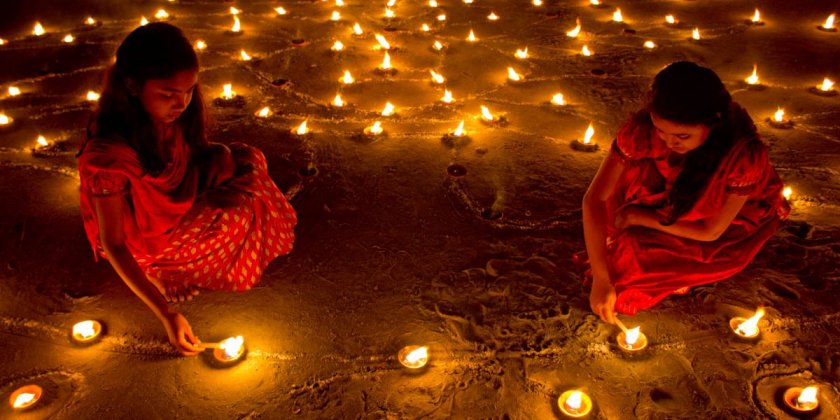
Image credit: Khokarahman/wikipedia.org
This year's celebrations are expected to be particularly impressive in the Indian city of Ayodhya, where millions of oil lamps and a large-scale drone show are planned, while major cities abroad are embracing the festival through cultural performances, light installations and community events.
Light triumphing over darkness
Diwali, also known as Deepavali, derives its name from the Sanskrit word Deepavali, meaning "row of lights." The festival symbolizes the victory of light over darkness, good over evil, and knowledge over ignorance.
Although primarily associated with Hinduism, Diwali also holds profound spiritual significance for Sikh, Jain and some Buddhist communities, each observing the occasion according to its own religious traditions.
In northern India, Diwali is closely connected to the Hindu epic Ramayana, particularly the return of Lord Rama to Ayodhya after 14 years of exile and his victory over the demon king Ravana. According to tradition, the people of Ayodhya welcomed Rama, his wife Sita and his brother Lakshmana by illuminating the city with rows of oil lamps.
In other regions, the festival commemorates different events. In parts of southern India, Diwali celebrates Lord Krishna's defeat of the demon Narakasura, while many Hindu families worship Lakshmi, the goddess of wealth, prosperity and good fortune.
For Jains, the occasion marks the spiritual liberation of Mahavira, one of Jainism's most revered teachers. Sikhs observe Bandi Chhor Divas, commemorating the release of Guru Hargobind from imprisonment.
Despite these distinct traditions, Diwali shares a powerful underlying message of renewal, hope, spiritual enlightenment and new beginnings.
Lamps, rangoli, sweets and family gatherings
Diwali is traditionally celebrated over five days, although the precise observances and dates vary between regions and communities.
Preparations often begin weeks in advance, with families thoroughly cleaning their homes, purchasing new clothes and decorating their surroundings to welcome prosperity and positive energy.
Among the festival's most recognizable symbols are diyas, small clay lamps filled with oil or ghee. These are placed along windowsills, balconies, doorways, courtyards and temple entrances, creating spectacular displays of flickering lights.
Another cherished tradition is rangoli, the creation of intricate patterns using colored powders, rice, sand or flower petals. These decorative designs, usually arranged near the entrances of homes, symbolize good fortune and hospitality.
Families gather for religious ceremonies, particularly Lakshmi Puja, during which prayers are offered for prosperity and well-being. Traditional sweets, including laddu, barfi and jalebi, are prepared and exchanged alongside gifts.
Festive meals, visits to relatives, music, dance performances and fireworks are also part of the celebrations in many communities.
For many Indians, Diwali represents not only a religious occasion but also an opportunity for reconciliation, generosity and strengthening family relationships.
Ayodhya plans a spectacular celebration
One of this year's most anticipated celebrations will take place in Ayodhya, in the northern Indian state of Uttar Pradesh, where preparations are underway for the tenth edition of the city's grand Deepotsav festival.
The main Deepotsav spectacle is scheduled for November 7, one day before Diwali itself.
According to announcements from Uttar Pradesh authorities, organizers are targeting the lighting of approximately three million traditional oil lamps across the city, particularly along the banks of the sacred Saryu River.
The ambitious programme also includes a drone show featuring approximately 2,100 drones, Ramayana-inspired cultural presentations, religious ceremonies, processions and illuminated public spaces.
The Ram Janmabhoomi temple complex alone is preparing to display approximately 100,000 lamps, with around 1,000 volunteers helping organize the illumination.
The celebration is expected to attract large numbers of pilgrims and tourists, while local authorities are strengthening crowd management, sanitation, transportation and security arrangements.
Environmental concerns influence celebrations in New Delhi
Alongside the festivities, environmental concerns are once again shaping Diwali celebrations, particularly in New Delhi, where seasonal air pollution remains a major public-health challenge.
For Diwali 2026, India's Supreme Court has temporarily relaxed restrictions on fireworks in Delhi and the surrounding National Capital Region, allowing only certified lower-emission fireworks, commonly called "green crackers," under strict conditions.
Their use will be permitted on November 7 and 8, between 6:00 a.m. and 7:00 a.m., and again between 8:00 p.m. and 10:00 p.m.
The court has also prohibited fireworks within 300 metres of hospitals, schools, care facilities and designated silence zones. The general ban is scheduled to return on November 9.
The decision highlights the continuing challenge of balancing traditional celebrations with environmental protection and public health.
Authorities will also monitor air-quality levels before, during and after the festival to assess the impact of the celebrations.
Celebrations in the United Kingdom, United States and Singapore
Beyond India, Diwali has developed into a major international cultural celebration, reflecting the presence and influence of Indian communities around the world.
The British city of Leicester, home to one of the largest Diwali celebrations outside India, is preparing an extensive cultural programme culminating on November 8.
Events include music and dance performances, traditional food stalls, exhibitions, workshops and the illuminated Golden Mile district.
A new artistic finale will feature Bollywood dance, orchestral music, aerial acrobatics and a laser show. A public fireworks display has been omitted for safety reasons.
In New York, celebrations began ahead of the main festival date. On October 24, Times Square hosted its annual Diwali celebration, featuring live music, Indian dance, cultural performances, a festive bazaar and a ceremonial lighting of traditional lamps.
Further celebrations are planned across the country, including a November 6 event at the Smithsonian's National Museum of Asian Art in Washington, D.C., featuring performances, food and creative activities.
Singapore's vibrant Little India district is celebrating Deepavali with elaborate street illuminations, traditional bazaars, cultural performances and festive shopping.
This year's street-lighting programme runs from October 3 to November 29, while the Deepavali Festival Village on Campbell Lane is scheduled to continue until November 8, bringing together traditional cuisine, handicrafts and decorations.
A universal celebration of hope and togetherness
As Diwali 2026 approaches, the Festival of Lights continues to demonstrate its ability to connect ancient traditions with contemporary life.
From the millions of lamps planned along Ayodhya's riverbanks to the colourful performances of Leicester and the illuminated streets of Singapore, the festivities reflect both the cultural richness of the Indian diaspora and the festival's expanding international appeal.
This year's celebrations also illustrate how traditions are evolving, with drone displays, laser performances and environmental safeguards increasingly complementing, or sometimes replacing, conventional fireworks.
Yet, beyond the grandeur of the public events, Diwali remains deeply personal. For families, it is a time to reconnect with loved ones, share food and gifts, offer prayers and look towards the future with renewed optimism.
On November 8, as countless lamps illuminate homes, temples and public spaces around the world, Diwali will once again convey its enduring message: even in the darkest times, light, hope and goodness can prevail.
YOU MAY ALSO LIKE