| / News |
Guru Purnima 2026: A Day to Honor Teachers, Wisdom and Spiritual Lineages
Guru Purnima, one of the most important spiritual observances in India and across much of South Asia, will be celebrated on Wednesday, July 29, 2026. Observed on the full moon (Purnima) of the Hindu month of Ashadha, the festival is dedicated to honoring gurus—teachers who impart knowledge, wisdom and spiritual guidance.
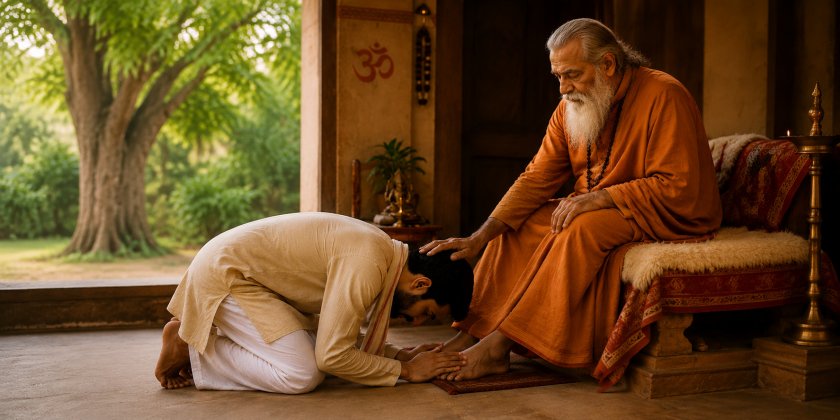
Although most closely associated with Hinduism, Guru Purnima is also an important occasion in Buddhism and Jainism, reflecting a shared reverence for enlightened teachers and the transmission of knowledge.
A tribute to the guru
The Sanskrit word guru means "one who dispels darkness," symbolizing a teacher who removes the darkness of ignorance through knowledge. On Guru Purnima, devotees express gratitude to spiritual masters, academic teachers, mentors and parents who have shaped their lives.
Across India, Nepal and other countries with Hindu and Buddhist traditions, followers visit temples and ashrams, perform ceremonial offerings (guru puja), meditate, chant scriptures and seek the blessings of their teachers. Many spiritual organizations also hold lectures, retreats, community meals and charitable activities.
For disciples living far from their teachers, the day is often marked by online gatherings, meditation sessions and acts of service performed in their guru's honor.
Yoga Tradition
In the yogic tradition, the day is celebrated as the occasion when Shiva became the first guru, as he began the transmission of Yoga to the Saptarishis
The Yogic Story of the First Guru describes how Lord Shiva transformed into Adiyogi (the first yogi) and Adi Guru (the first teacher) to transmit the science of yoga to humanity.
Over 15,000 years ago, a mysterious yogi appeared in the upper reaches of the Himalayas. He did not speak, rule, or introduce himself. Instead, he went into states of intense ecstasy, alternating between wild dancing and complete, unmoving stillness.
Large crowds gathered expecting miracles, but he ignored them. Because he showed no signs of a normal human life, people gradually walked away.
While the crowds left, seven persistent seekers remained. They realized his stillness was not a lack of life, but a state of ultimate liberation. They begged him to teach them how to experience the same state.
The yogi initially dismissed them, stating that it took millions of years of preparation to grasp this science. Undeterred, the seven men sat down to prepare themselves. They spent 84 years doing intense spiritual practices (sadhana) without receiving a single word from him.
When the summer solstice arrived, the earth shifted into its southern run (Dakshinayana). The yogi looked at the seven men and saw they had transformed into glowing vessels of pure receptivity. He could no longer ignore them.
On the first full moon day after the solstice, the yogi turned south to face them. By doing so, he took on the form of Dakshinamurthy and became the Adi Guru.
He began pouring the complex mechanics of the human system and the 112 methods of yoga into these seven disciples.
Hindu significance
In Hindu tradition, Guru Purnima is also known as Vyasa Purnima, commemorating the birth anniversary of the sage Veda Vyasa, who is traditionally credited with compiling the four Vedas, authoring the Mahabharata and composing the Puranas and the Brahma Sutras.
Vyasa is regarded as one of India's greatest spiritual teachers and is considered the archetypal guru. Many monastic orders and yoga traditions trace their teaching lineages back to him.
For practitioners of yoga and Vedanta, Guru Purnima represents an opportunity to renew their commitment to study, meditation and spiritual discipline while expressing gratitude to the lineage of teachers who have preserved ancient knowledge through generations.
Buddhist observance
In Buddhism, Guru Purnima coincides with the commemoration of the Buddha's first sermon at Deer Park in Sarnath after attaining enlightenment.
According to Buddhist tradition, this discourse—the Dhammacakkappavattana Sutta ("Setting in Motion the Wheel of Dharma")—introduced the Four Noble Truths and the Noble Eightfold Path to the Buddha's first five disciples, establishing the Buddhist Sangha.
The day is especially important in Theravada Buddhism, where monasteries host meditation retreats, Dharma talks and ceremonies.
Lay followers often observe additional precepts, offer food and necessities to monks and spend time in meditation and scriptural study.
Jain tradition
For Jains, Guru Purnima marks the occasion when Mahavira, the 24th Tirthankara, accepted Gautama Swami as his first chief disciple. The day emphasizes respect for spiritual teachers who guide practitioners toward self-discipline, nonviolence and liberation.
Jain communities commemorate the occasion through prayers, scriptural recitation, fasting, meditation and acts of charity.
A universal message
While rooted in ancient religious traditions, Guru Purnima has increasingly become a broader celebration of education, mentorship and lifelong learning.
Schools, universities, yoga centers and cultural organizations often organize events recognizing educators and mentors. Many people use the occasion to thank teachers who have influenced their personal or professional lives, regardless of religious affiliation.
The festival also highlights the enduring importance of preserving knowledge through direct teacher-student relationships in an era increasingly shaped by digital communication.
Guru Purnima 2026
In 2026, Guru Purnima falls on Wednesday, July 29, with celebrations expected across India, Nepal, Sri Lanka and Buddhist and Hindu communities worldwide.
Major pilgrimage centers such as Sarnath, Varanasi, Rishikesh, Haridwar, Bodh Gaya, Shravanabelagola and numerous monasteries, temples and ashrams are expected to host special prayers, meditation programs, devotional singing, spiritual discourses and community service events.
For millions of devotees, the full moon of Ashadha remains a timeless reminder that wisdom is not only acquired through books, but also through the guidance, compassion and example of those who dedicate their lives to teaching others.
YOU MAY ALSO LIKE