| / Buddhist Documentaries |
Sacred Places of The Buddhists (2)
Kapilavastu, Nepal
A documentary film by BOGDAN-FLORIN PAUL
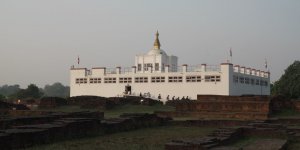
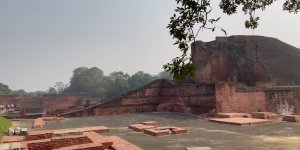
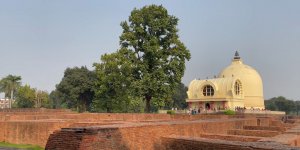
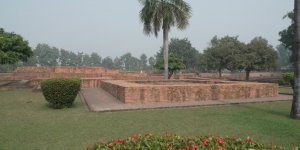
In the lowlands of southern Nepal, near the border with India, lie the ruins of ancient Kapilavastu, the capital of the Sakyan kingdom and the place where Prince Siddhartha Gautama is traditionally said to have spent the first 29 years of his life.
Today, the archaeological site is situated near the village of Tilaurakot.
Set in a warm, sunlit landscape approximately 16 kilometers south of the Himalayan foothills, Kapilavastu lies near the Banganga River, also known as the Arrow River. To the north once stretched the Mahavana—the Great Forest, extending toward the Himalayas.
On clear days, the green foothills appear remarkably close, while the distant snow-capped Himalayan peaks—including Dhaulagiri—rise on the horizon.
About 16 kilometers southeast of Tilaurakot, at Piphrawa—just 1.6 kilometers south of the Nepal–India border—stands a stupa alongside the remains of a Buddhist monastic complex.
This stupa is particularly significant for the discovery of relics attributed to the Buddha, together with exquisitely crafted jewelry made from precious stones and gold. Some of these remarkable objects can now be seen in New Delhi as part of the exhibition “The Light and the Lotus: Relics of the Awakened One.”
What do these sacred places look like today? And what can their surviving ruins reveal about the world in which the Buddha lived?
Discover the answers in this episode of the 4K video documentary series Sacred Places of the Buddhists. Journey through the landscapes of Kapilavastu and Piphrawa, explore their remarkable history and archaeology, uncover the significant events in the Buddha’s life that unfolded here, and immerse yourself in the spiritual heritage of Buddhism.
YOU MAY ALSO LIKE