| / Ashrams, Monasteries |
Swami Dayananda Ashram, Rishikesh, India
Arsha Vidya Gurukulam are institutions for Vedic teaching founded by Swami Dayananda Saraswati (1930 – 2015). Arsha Vidya literally translates to “knowledge of rishis” (sages). A gurukulam refers to a center for residential learning that evolved from an ancient tradition of the Vedic period.
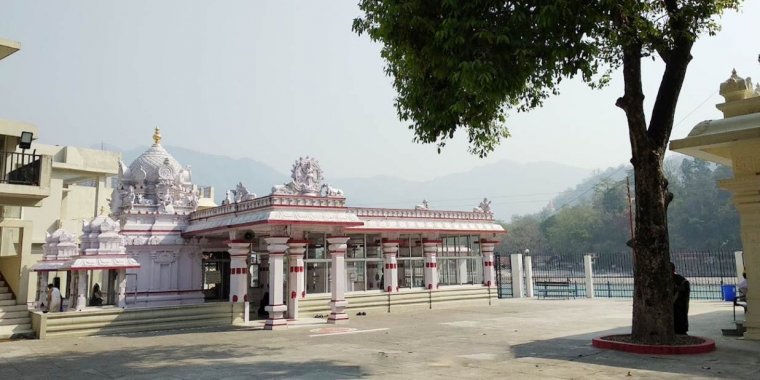
Swami Dayananda Ashram
Location
The two main centers are in Tamil Nadu, India and in Pennsylvania, United States, with a sister ashram Arsha Vidya Pitham (Swami Dayananda Ashram)1 located in Rishikesh and over 60 other centers in India and abroad.
History
Swami Dayananda Ashram was established in 1967 and expanded in 1982 when also received the official name Arsha Vidya Pitham. After the Swami's mahāsamādhi (i.e., death) in 2015, a shrine was built at the ashram, containing Dayanandesvara, a consecrated lingam2 for devotees, as well as the form of the Swami rendered into a statue.
Several students and renunciates (Saṃnyāsa) who have studied at the centres, have gone on to spread Dayananda's teachings elsewhere and some have established ashrams of their own.
Features
Since its formation, Swami Dayananda Ashram has provided an academic-like environment to focus on study of Advaita Vedānta, Sanskrit, the Vedas, hatha yoga and meditation, as well as ayurveda and astrology.
Courses range in duration from a single weekend to three years, and instruction is in English, though advanced students study the original texts in Sanskrit.
Facilities include a bookstore, modern facilities for dining, as well as a 250-person lecture hall. It maintains a library with over 5,000 titles on grammar and philosophy and the personal collections of Swami Dayananda Saraswati himself.
It also runs a publication house, Sri Gangadhareswar Trust that produces books on Vedanta, Hinduism, Hindu philosophy and literature, Paninian grammar, Indian history and related subjects.
It houses the temple of Gangadhareswar3, a shrine situated close to the Ganges dedicated to Shiva.
Retreats
Throughout the year, regular retreats take place on Vedanta, Yoga, and other subjects taught by Arsha Vidya Teachers.
Daily schedule starts at 5:30am with Temple Puja (one hour), then continues with meditation (45 minutes), breakfast, Vedānta Class (one hour), Chanting Class (30 min.), Sanskrit Class (one hour), lunch, seva (volunteer work), second Vedānta Class, Temple Puja, dinner and ends with Satsang.4
Celebrations
There is an annual Commemoration of Swami Dayananda Saraswati Mahāsamādhi. In Hindu or Yogic traditions, Mahāsamādhi, the great and final samādhi, is the act of consciously and intentionally leaving one's body at the moment of death.
According to this belief, a realized and enlightened (Jivanmukta), yogi (male) or yogini (female) who has attained the state of nirvikalpa samādhi, can consciously exit from their body and attain enlightenment, often while in a deep, conscious meditative state.
Etiquette and Awareness
The Ashram does not accept requests for staying in the ashram from people who come on tourism or for any other purpose.
The visitors need to follow vegetarian diet in the ashram. Any use of prohibited items is not permitted in the ashram premises. No pet animals are allowed inside the Ashram. Ashram reserves the right to ask any visitor to vacate the room if there is any violation of the rules.
In accord with the tradition, the teachings are given for free. However, reasonable donations are expected to cover the cost of the accommodation and food.
Sources
• https://arshavidya.in/
• https://dayananda.org/
• https://en.wikipedia.org/wiki/Arsha_Vidya_Gurukulam
• https://rishikesh.tourismindia.co.in/
Footnotes
1. pīṭha means “religious center” or “place of divinity.”
2. A lingam (Sanskrit: liṅga, lit. "sign, symbol or mark"), sometimes referred to as linga or Shiva linga, is an abstract representation of Shiva. "Lingam" is additionally found in Sanskrit texts with the meaning of "evidence, proof" of God and God's existence. In the Shaiva traditions, the lingam is regarded as a form of spiritual iconography.
3. Gangadhareswara means the Lord (īśvara) who adorns (dhara) the Ganga (Gange).
4. Satsang is a Sanskrit word that means "gathering together for the truth" or, more simply, "being with the truth." Satsang is an audience with a satguru for religious instruction.
YOU MAY ALSO LIKE