| / Ashrams, Monasteries |
The 64 Yoginī Temple, Hirapur, Odisha, India
The 64 Yoginī Temple in Hirapur, Odisha, also known as the Chausath Yoginī Temple, is an ancient structure dedicated to the worship of the mother goddess in Hindu mythology.
Located about 20 km southeast of Bhubaneswar, the capital of Odisha, this temple is a unique architectural marvel that is believed to have been built between the 9th and 12th centuries, during the reign of the Kalachuri, Chandel, and Pratihara dynasties. 1
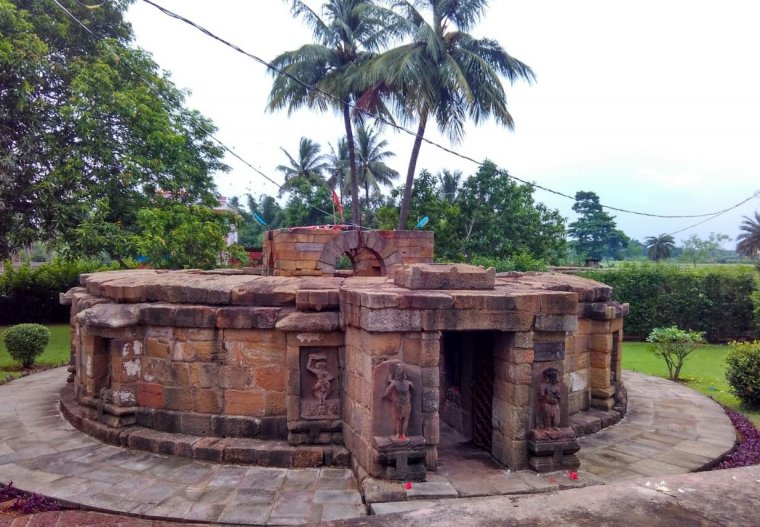
Chausath Yoginī Temple. Credit: Sudeep Pramanik/wikimedia.org
The temple's most distinctive feature is its circular, open-air design. It consists of a circular courtyard surrounded by 60 niches, each housing a carved stone statue of a yoginī - female tantric practitioners associated with the worship of Shakti, the divine feminine energy.
A central altar called the Caṇḍī2 Maṇḍapa, enshrines four Bhairavas, and the remaining four yoginīs on the four sides.
The roofless structure (maṇḍapa) allows devotees to worship under the open sky, creating a direct connection between the earthly and celestial realms.
According to legend, the temple was built by Queen Hiradevi of the Bramha Dynasty in the 9th century, though it was later abandoned and rediscovered in 1953.
The temple's unique architecture and historical significance have made it an important site for both religious pilgrims and archaeology enthusiasts.
The yoginīs depicted in the temple represent various aspects of divine feminine power. Each statue is intricately carved, showcasing different poses, attributes, and symbolic elements.
The central shrine within the circular structure is dedicated to Mahāmāyā, the presiding deity of the temple.
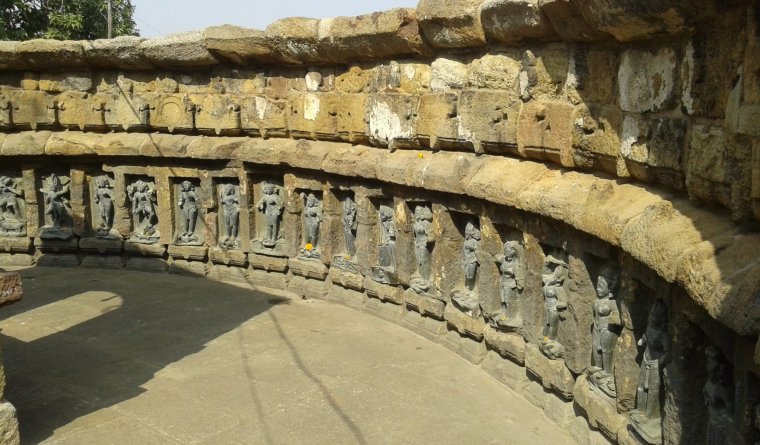
Inside Yoginī Temple. Credit: Sudeep Pramanik/wikimedia.org
Myths and legends
There are a few myths and legends associated with the 64 Yoginī Temple in Hirapur:
• One legend states that Goddess Durga once took the form of 64 yoginīs to defeat a demon. After their victory, the yoginīs requested Durga to construct a temple in their honor, which led to the creation of the Chausath Yoginī Temple.
• The temple is associated with tantric practices and is believed to have been a center for developing supernatural powers or siddhis. There are folk beliefs that crossing a yoginī would result in terrible consequences.
• Local superstitions warn against lingering at the temple after dark, as strange sounds are said to emanate from it at night. The yoginīs are believed to be most active after sunset.
• The temple's circular, open-air design is thought to represent the chakra - the symbolic wheel of the universe in Hindu cosmology.
• Some accounts suggest that the central altar once housed an image of Maha Bhairava, though this statue is no longer present.
The 64 Yoginīs Names
There is no universally agreed list of the names of the 64 yoginīs. Different texts and traditions provide varying lists, reflecting the diversity of the yoginī cult.
Maya/Bahurupa/Chandika, Tara, Narmada, Yamuna, Shanti/Kanti/Lakshmi/Manada, Vrddhi/Kriya/Varuni, Gauri/Ksemankari, Aindri/Indrani, Varahi, Ranavira/Padmavati, Ostrarudha/Vanaramukhi, Vaishnavi, Kalaratri/Panchavarahi, Vadyarupa, Charchika, Marjari/Vetali, Chinnamasta, Vrshabhanana/Vindhyavasini, Jalakamini, Ghatavara, Vikarali/Kakarali, Saraswati, Virupa, Kaveri, Varahi/Bhalluka, Narasimhi/Simhamukhi, Viraja, Vikatanana, Mahalakshmi, Kaumari, Mahamaya, Usha/Rati, Karkari, Sarpashya/Chittala, Yasha, Aghora/Vaivasvati, Bhadrakali/Rudrakali, Matangi/Shitala/Vainayaki/Ganeshani/Gajanana, Vindhyavalini, Abhaya/Virakumari, Maheswari, Kamakshi/Ambika, Kamayani, Ghatabari, Stuti, Kali, Uma, Narayani, Samudra, Brahmani, Jwalamukhi, Agneyi, Aditi, Chandrakanti, Vayuvega, Chamunda, Murati, Ganga, Dhumavati/Tarini, Gandhari.3
The 4 Yoginīs at the Central Chandi Mandapa: Sarvamangala, Ajita, Suryaputri, Vayuvina.
Notable features and attributes of the yoginīs
Theriomorphic Forms: Many yoginīs have animal features, such as bird heads or characteristics from other animals.
Supernatural Powers: The yoginīs are believed to possess extraordinary powers (siddhis). They are often depicted carrying skulls and other tantric symbols, practicing in cremation grounds and other liminal spaces.
Astrological Significance: Some yoginīs are associated with zodiac animals, reflecting their connection to astrological practices.
Fierce and Autonomous: The yoginīs are depicted as fierce and autonomous, embodying the raw, untamed aspects of the sacred feminine force. They are both protectors and disseminators of esoteric tantric knowledge.
Connection to Matrikas: The yoginīs are often linked to the eight mothers (aṣṭā mātṝkā) and are considered aspects or attendants of the Great Goddess (Devī). This connection elevates their status and integrates them into broader Hindu practices.
Healing and Protection: The yoginīs are believed to have the power to fulfill desires, drive away negativity and fear, prevent misfortunes, and bestow knowledge, peace, prosperity, and auspiciousness.
Unique Personalities: Each yoginī represents a specific aspect of the divine feminine energy, governing different aspects of creation. They offer a doorway into undifferentiated awareness and challenge devotees to embrace the full spectrum of existence.
Historical and Cultural Significance: The yoginī cult originated in rural and tribal traditions and has strong connections with the worship of local village deities (Grama Devatas). The temples dedicated to these divine figures, dating from the 9th to the 12th century, reflect their connection with the cosmos and their role as intermediaries between the earthly and the ethereal realms.
Emotional Expressions: The statues express a range of emotions, allowing worshippers to connect with different states like anger, sadness, pleasure, joy, desire, and happiness.
Sources
https://en.wikipedia.org/wiki/Chausath_Yogini_Temple,_Hirapur
https://timesofindia.indiatimes.com/travel
https://atmaprajnananda.blogspot.com/2012/10/64-yoginis-at-hirapur-near-bhubaneswar.html
https://www.yoginiashram.com/how-the-8-ancient-matrikas-elevate-consciousness/
Notes
1. At present, there are only four known 64 yoginī temples in India:
• Hirapur, Odisha.
• Ranipur-Jharial, Balangir district of Odisha.
• Khajuraho, Madhya Pradesh, in Chhatarpur district of Madhya Pradesh.
• Mitaoli, Madhya Pradesh, in Morena district. The temple is also called Ekattarso Mahadeva Temple.
2. Caṇḍī or Caṇḍikā "the Furious", epithet of a terrible aspect (mahāvidyā ) of the Goddess (Śakti).
3. Source: https://atmaprajnananda.blogspot.com/2012/10/64-yoginīs-at-hirapur-near-bhubaneswar.html
YOU MAY ALSO LIKE