| / Ashrams, Monasteries |
Dubde Monastery, Sikkim, India
Nyingma Mindroling Lineage, 17th century, one monk.
Dubde Monastery, also called Dubdi or Yuksom Monastery, is a Buddhist monastery of the Nyingma tradition, Mindroling lineage.
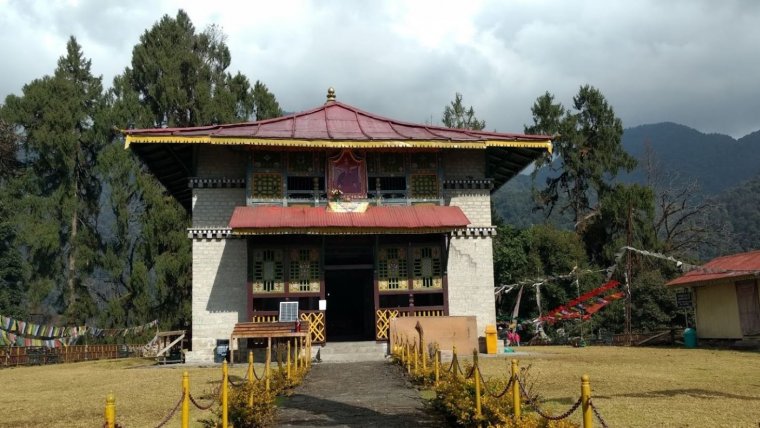
Dubde Monastery. Photo: Devashish Patel
Location
The monastery is located on the top of a hill, 1977m altitude, about three kilometers from Yuksom.
History
The first ruler, Chhogyal Phuntshog Namgyal (1604-1670) founded Dubde Monastery around 1647CE in veneration to the Patron Saint Lhatsün Namkha Jikmé (1597- 1653)1. Later, it was fully reconstructed by his incarnation, the Third Lhatsün Jikmé Pawo (1682-?) in 1723CE during the reign of fourth Lhari Rinzing or Temi Lharipa the Chhogyal Gyurmed Namgyal (1707-1733).
Dubde Monastery is also known as the Hermit's Cell after Lhatsün Namkha Jikmé, who along with two other lamas from Tibet met at Norbugang near Yuksom and crowned Chogyal Phuntsog Namgyal as the first King or Chogyal of Sikkim in 1642. The literal meaning of 'Dubdi' in local language is "the retreat".
Yuksom is part of Buddhist religious pilgrimage circuit involving the Norbugang Chorten, Pemayangtse Monastery, the Rabdentse ruins, the Sanga Choeling Monastery, the Khecheopalri Lake, and the Tashiding Monastery.
Features
The murals of Maha Shidhas of Sikkim, the lineages of high lamas, Guru Tshog-Shing and various Protecting Deities were painted in 1945.
Images of divinities, saints, other symbols and collection of manuscripts and texts are housed in the monastery. The statues of three lamas who were responsible for establishing Yuksom are also installed in the monastery.
On the second floor, the monastery has two side aisles where a rare collection of manuscripts and other ritual texts are preserved.
The Gonpa has a Kangso Lhakhang, which is popularly known as ‘Dubde Phagmo Lhakhang’ or the Shrine of the Deity Vajra Varahi, also called ‘Ku Sungjon’ or the Statue that speaks and the devotees behold it as a Sacred Idol. This Lhakhang was said to have been built by Lama Lhatsün Jikmé Pawo.
The Dubde Monastery is recognized as the first Monastery of Sikkim after the first Dubde, which was built in 14th century, at Paw Hungri hill (and eventually became ruined) and the two lhakhangs at Yuksam.2
Dubde Monastery is protected as a Sikkim heritage site under the Archaeological Survey of India.
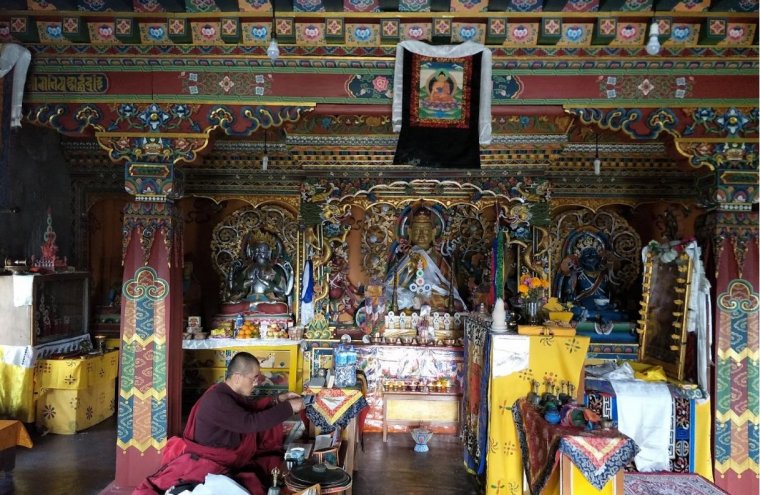
Dubde Lakhang, on the first floor. Photo: Moon Light
Festivals
Dubde Monastery celebrates all the festivals of the Tibetan Buddhism rituals. Losar, the Tibetan New Year, one of the most important festivals, is celebrated around the first week of February.
Travel and Visiting
Taxi services are available at Gangtok to reach Dubde Monastery.
Sources
• http://www.sikkimeccl.gov.in/History/Monasteries/West/DubdeMonastery.aspx
• https://en.wikipedia.org/wiki/Dubdi_Monastery
• https://www.rigpawiki.org
Footnotes
1. Lhatsün Namkha Jikmé was an incarnation of both the great pandit and Dzogchen master Vimalamitra, who attained the rainbow body, and of the omniscient Longchenpa. He was born at Jaryül in southern Tibet. More than two hundred of Lhatsün Namkha Jikmé’s writings have survived. Accomplishing the Life-Force of the Vidyadharas and The Spontaneous Song of the Clouds have continued to be transmitted and practiced throughout Tibet and particularly in Sikkim right up to the present day without any decline.
2. These Lhakhangs were built in 1643CE by Lama Ngadag and Kathok Lama at Yoksam Valley, and also became ruined later).
YOU MAY ALSO LIKE